
What is on a standard home inspection checklist?
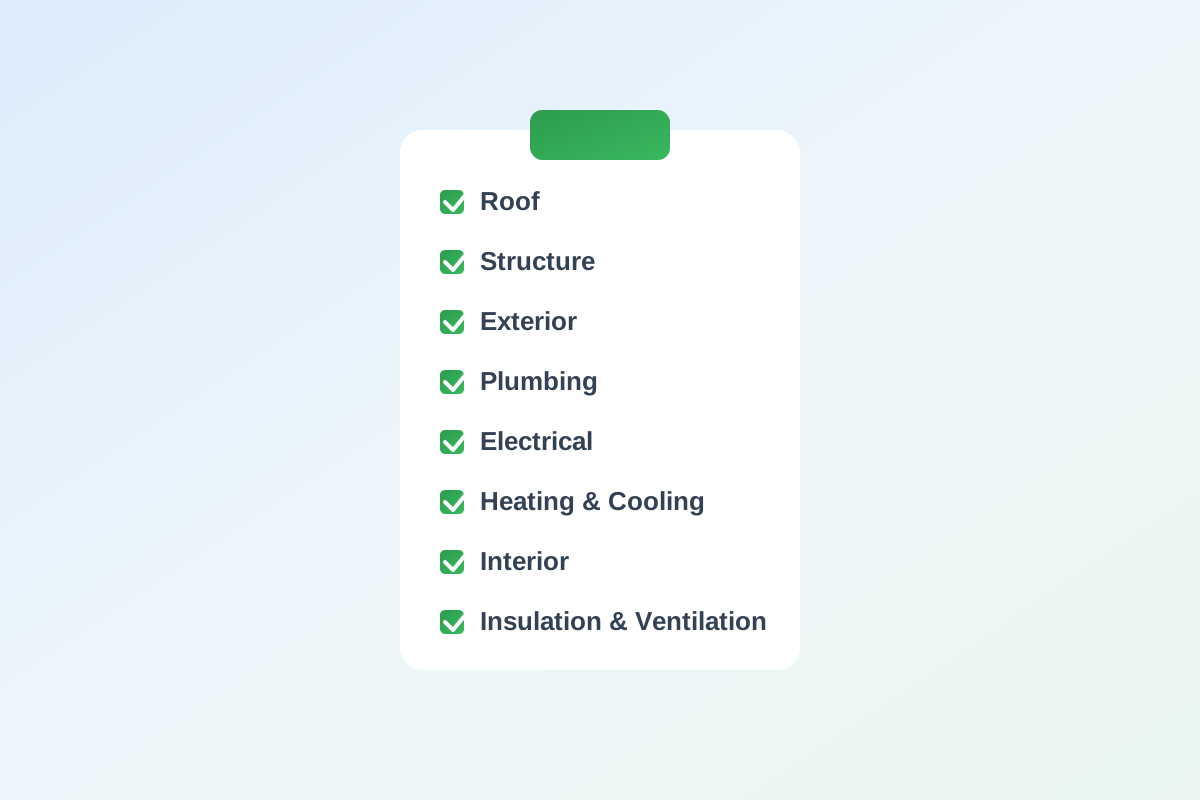
A standard home inspection checklist covers ten major systems: the roof, structure, exterior, plumbing, electrical, heating and cooling, interior, insulation and ventilation, and built-in appliances. According to the National Association of Realtors, a home inspection is a visual check of a home's condition, where a licensed inspector looks for problems in the roof, foundation, plumbing, electrical panel, and dozens of other spots, then hands the buyer a written report on what needs attention. Below is the full checklist broken down system by system, plus a plain list of what is not included and why that still matters to you.
Whether you inspect homes for a living or you are a buyer trying to understand what you paid for, this list gives you the same picture a trained eye looks for on inspection day. Keep it handy as a quick reference the next time you walk through a property, because knowing the checklist ahead of time makes the whole process feel a lot less like a mystery and a lot more like a plan.
- A standard checklist covers ten major systems, from the roof down to the built-in appliances.
- The inspection is visual and non-invasive, so several tests are sold as separate add-ons.
- Radon, mold, sewer scope, septic, and pest inspections all fall outside a general inspection.
- Most inspections take two to four hours, with a written report in 24 to 48 hours.
What is a standard home inspection checklist?
A standard home inspection checklist is the set of systems and parts of a house that a licensed inspector is expected to look at during a general inspection. It is not a random list. Both big inspector groups publish one. The InterNACHI Standards of Practice lay out ten sections: roof, exterior, foundation and structure, heating, cooling, plumbing, electrical, fireplace, attic and insulation, and interior. The ASHI Standard of Practice covers almost the same ground: roof, structure, exterior, plumbing, electrical, heating, cooling, interior, and insulation and ventilation.
These rulebooks matter because they set the floor. An inspector cannot skip a whole system and still call the report a full inspection. They also spell out limits, which we cover later, so nobody is surprised by what got left out.
How does a home inspection work?
A home inspection usually takes two to four hours and follows three simple stages: a bit of prep, the walk-through, and the report.
Before the inspector arrives
The seller or agent should leave the power and water on, clear access to the electrical panel, attic hatch, and crawl space, and move pets out of the way. A blocked panel or a locked gate can mean a whole section gets marked as not inspected, which helps nobody.
Leave the power and water on, unlock the panel, attic hatch, and crawl space, and clear a path to each. Every access point you open is one more system that gets fully inspected instead of flagged as not inspected.
Walking the property, system by system
The inspector starts outside, moves to the roof and attic, then works down through structure, plumbing, electrical, heating and cooling, and finally the interior rooms. Every stop gets a photo and a note. This is exactly why organizing photos by area matters so much, since a report with mixed-up pictures is hard for anyone to trust later.
Getting the written report
Most buyers get a report within 24 to 48 hours, often with photos next to each finding. A good report reads like a story of the house, not a pile of jargon, so you can act on it fast.
The checklist at a glance
Here is the whole standard checklist in one view before we walk each system in detail. Every row is a stop the inspector is expected to reach on a general inspection.
| System | What the inspector checks |
|---|---|
| Roof and attic | Covering, flashing, gutters, framing, past leaks, ventilation, insulation depth |
| Structure and foundation | Foundation type, cracks, uneven settling, water stains, framing members |
| Exterior | Siding, trim, windows, doors, decks, railings, grading and drainage |
| Plumbing | Supply and drain lines, fixtures, toilets, faucets, water heater |
| Electrical | Main panel, breakers, wiring, outlets, GFCI and AFCI protection |
| Heating and cooling | Furnace or heat pump, air conditioner, thermostat, visible ductwork |
| Interior | Walls, ceilings, floors, doors, windows, stairs, garage door safety |
| Insulation and ventilation | Attic and wall insulation, bathroom, kitchen, and laundry exhaust fans |
| Built-in appliances | Range or oven, dishwasher, disposal, built-in microwave and hood |
What is on the roof and attic checklist?
The roof section covers the covering material, flashing around chimneys and skylights, gutters, downspouts, and any visible sagging or wear. In the attic, the inspector looks at framing, signs of past leaks, ventilation, and the depth of the insulation from the access hatch. A missing shingle or a rusted flashing seam is a classic find here.
What is on the structure and foundation checklist?
This part covers the foundation type, visible cracks, and signs that the house is settling unevenly, such as sloping floors or doors that stick. In a basement or crawl space, the inspector checks for water stains, musty smells, and the condition of framing members that hold the house up. Structural issues are some of the priciest to fix, so this section gets close attention.
What is on the exterior checklist?
Outside, the checklist covers siding and trim, windows and doors, walkways, decks, railings, and how the yard drains water away from the foundation. Bad grading that sends rainwater toward the house is one of the most common exterior findings, and it is often a cheap fix compared to the water damage it can cause.
What is on the plumbing checklist?
Plumbing covers visible supply lines, drain lines, fixtures, toilets, faucets, and the water heater. The inspector runs water, flushes toilets, and checks under sinks for old leaks or corrosion. Slow drains, a leaking water heater, or low water pressure at a fixture all show up here.
What is on the electrical checklist?
The electrical section covers the main panel, breakers, visible wiring type, outlets, and safety devices like GFCI and AFCI protection near water and bedrooms. The inspector tests a sample of outlets and checks for double-tapped breakers or outdated wiring, which come up often in older homes and can be a real safety issue.
What is on the heating and cooling (HVAC) checklist?
HVAC covers the age and condition of the furnace or heat pump, the air conditioner, the thermostat, and the visible ductwork. The inspector runs the system and checks that air is moving and that temperatures make sense room to room. An HVAC system that is near the end of its life is a big-ticket item worth knowing about before closing.
What is on the interior checklist?
Inside, the checklist covers walls, ceilings, floors, interior doors and windows, stairs and railings, and the garage door and its opener safety features. The inspector looks for water stains, cracked drywall, and doors or windows that do not open and close the way they should.
What is on the insulation and ventilation checklist?
This part covers the type and depth of insulation in the attic and, where visible, in exterior walls, plus exhaust fans in the bathrooms, kitchen, and laundry area. Poor ventilation can trap moisture, which leads to mold and higher energy bills, so this section connects directly to comfort and cost.
What appliances are on the checklist?
Standard inspections check the built-in appliances that convey with the home, such as the range or oven, the dishwasher, the garbage disposal, and any built-in microwave or exhaust hood. The inspector turns each one on to confirm it works, but does not test every cycle or setting in detail.
What is NOT on a standard home inspection checklist?
This is the part that surprises a lot of first-time buyers. A general inspection is visual and non-invasive, so several things are left off and sold as separate add-ons. Costs for these extras vary, and Houwzer's 2026 cost breakdown lists typical prices such as around 250 dollars for radon testing, close to 287 dollars for a sewer scope, and about 660 dollars for a full mold inspection.
- Radon gas testing, since it takes multiple days and needs a placed monitor, not a walk-through. The National Radon Program Services notes that testing is usually requested separately and the EPA's action level is 4 pCi/L or higher.
- Mold and air quality testing, since that needs lab sampling beyond a visual check.
- Sewer scope inspections, since the underground sewer lateral is out of sight and needs a camera.
- Septic system inspections, since the EPA notes a septic tank should be inspected every 1 to 3 years and pumped every 3 to 5 years by a specialist, not as part of a general home inspection.
- Termite and other wood-destroying insect inspections, which usually need a licensed pest inspector.
- Pools, spas, wells, and other specialty systems, which need their own trained inspector.
None of this means a standard inspection is weak. It means the checklist has a clear, honest scope, and a good inspector will tell you plainly when something is outside of it so you can decide whether to add it on.
Why does the full checklist matter to buyers and sellers?
HUD's home buying guidance lists getting an inspection as one of the key steps before closing, because it protects buyers from moving into costly surprises the appraisal never looks at. An appraisal checks value for the lender. A checklist inspection checks condition for you. For sellers, a full checklist inspection ahead of listing can flag cheap fixes before they turn into negotiation leverage for a buyer later.
How PadInspector helps you follow the checklist
PadInspector is built around this exact system-by-system checklist. You walk the roof, the structure, the plumbing, the electrical panel, and every other stop while talking into your iPad, iPhone, or Apple Watch, and the app transcribes your words and attaches each photo to the right area automatically. No more sorting three hundred photos back at the office and guessing which bathroom that leak shot came from.
It also looks up building code violations for you as you go, works fully offline if a basement or crawl space kills your signal, and lets a multi-inspector team see who already checked which system, so nobody duplicates work. The full feature list shows how each part of the checklist maps to a feature built for that exact stop on your walk-through.
FAQ: standard home inspection checklist
How long does a home inspection with a full checklist take?
Most general inspections take two to four hours, depending on the size and age of the home. A larger house or one with an unfinished basement and crawl space can run longer.
Does a standard checklist include the roof if it is steep or hard to reach?
The roof is still on the checklist, but an inspector who cannot safely walk a steep or wet roof will often inspect it from the ground or with a drone or ladder, and will note in the report that access was limited.
Is a home inspection checklist the same in every state?
The core systems are close to the same everywhere, since most inspectors follow ASHI or InterNACHI standards. Some states add their own required items or licensing rules on top of that base checklist.
Can a buyer ask for extra items to be added to the checklist?
Yes. Radon, mold, sewer scope, septic, and pest inspections can all be added for an extra fee, and many inspection companies offer them as bundled add-ons alongside the general inspection.
What happens if an item on the checklist cannot be inspected?
The inspector will mark it as not inspected and explain why, whether that is a locked panel, a blocked crawl space, or a system that was shut off. That note protects both the buyer and the inspector.
Does the checklist cover cosmetic issues like paint color or old carpet?
No. The checklist focuses on function and safety, not looks. A worn kitchen or dated paint will not show up as a finding unless it is hiding a real defect underneath.
Following the full checklist, system by system, is what turns a walk-through into a report you can actually trust and act on. If you are a working inspector who wants to move through that same checklist faster and hand over a cleaner report before you even leave the driveway, request an invite to PadInspector and see the difference for yourself.
Frequently asked questions
How long does a home inspection with a full checklist take?+
Most general inspections take two to four hours, depending on the size and age of the home. A larger house or one with an unfinished basement and crawl space can run longer.
Does a standard checklist include the roof if it is steep or hard to reach?+
The roof is still on the checklist, but an inspector who cannot safely walk a steep or wet roof will often inspect it from the ground or with a drone or ladder, and will note in the report that access was limited.
Is a home inspection checklist the same in every state?+
The core systems are close to the same everywhere, since most inspectors follow ASHI or InterNACHI standards. Some states add their own required items or licensing rules on top of that base checklist.
Can a buyer ask for extra items to be added to the checklist?+
Yes. Radon, mold, sewer scope, septic, and pest inspections can all be added for an extra fee, and many inspection companies offer them as bundled add-ons alongside the general inspection.
What happens if an item on the checklist cannot be inspected?+
The inspector will mark it as not inspected and explain why, whether that is a locked panel, a blocked crawl space, or a system that was shut off. That note protects both the buyer and the inspector.
Does the checklist cover cosmetic issues like paint color or old carpet?+
No. The checklist focuses on function and safety, not looks. A worn kitchen or dated paint will not show up as a finding unless it is hiding a real defect underneath.
Sources
Spend less time on reports, more time inspecting
PadInspector turns your voice into a finished inspection report before you leave the driveway. See how the voice-to-report workflow works.