How hard is the National Home Inspector Exam and what's the pass rate?
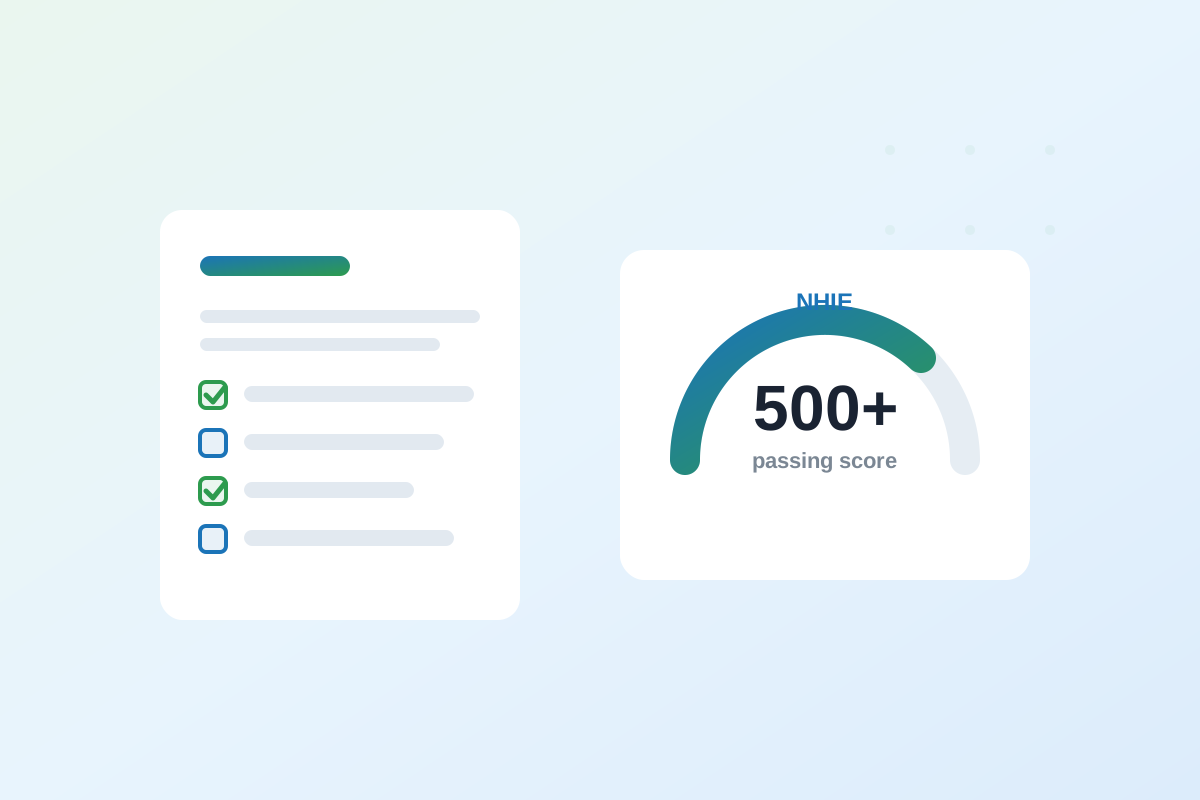
Here is the short answer. The National Home Inspector Examination (NHIE) is a hard test, but a fair one, and most prepared people can pass it. The exam has 200 questions and a four hour time limit, and you pass by scoring 500 or higher on a scaled range of 200 to 800, according to the Examination Board of Professional Home Inspectors (EBPHI), the group that runs the test. The board does not publish one official pass rate. Some training providers report an estimate near 55 percent, which we explain, and label as reported, below.
- The NHIE is 200 questions in 4 hours; you pass with a scaled score of 500 or higher on a 200 to 800 scale.
- Only 175 questions count toward your score. 25 are unscored pretest items you cannot identify.
- There is no official published pass rate. The most repeated figure is a reported estimate near 55 percent.
- It is a fair, criterion referenced test, so well prepared candidates pass at a high rate.
What is the National Home Inspector Examination?
The NHIE is a written test that checks whether you have the knowledge to inspect homes safely and well. It is not a hands on test. You will not climb a roof or crawl under a house on exam day. Instead, you answer multiple choice questions on a computer at a test center.
The test is used across the country. Many states require it before they will grant a home inspector license. It is meant to prove that you understand how a house works, how its systems can fail, and how to report what you find in a clear way.
Who administers the NHIE?
The exam is owned and managed by the Examination Board of Professional Home Inspectors, usually shortened to EBPHI. This is a nonprofit board, not a school and not a trade group. Its job is to keep the test fair, valid, and up to date.
EBPHI does not run the test centers itself. It uses a testing company called PSI to deliver the exam. There are more than 300 PSI test centers across the United States and Canada, and most are open six days a week. That makes it easier to find a seat near you.
How many questions are on the exam?
The NHIE has 200 multiple choice questions. You get four hours to finish. That works out to a little more than one minute per question, so pacing matters. If you get stuck, mark the question and move on. You can come back later.
Why are 25 questions not scored?
Not all 200 questions count toward your score. As EBPHI explains, 25 of them are pretest questions. These are new questions the board is trying out for future exams. They do not affect whether you pass. The catch is that you cannot tell which 25 are the test questions, so you have to treat every question as if it counts. In practice, 175 questions decide your result.
How much time do you get?
You get four hours. That sounds like a lot, and for most people it is enough. Still, four hours is a long stretch to stay sharp. Plan to work at a steady pace. Take a breath, read each question fully, and do not rush the first hour and then run out of gas at the end.
What score do you need to pass?
You need a scaled score of 500 or higher. The scale runs from 200 to 800. It is important to know that 500 is not the same as getting 50 percent of the questions right. The score is scaled, which means it is adjusted for how hard each version of the test is. Some guides note that the raw number of correct answers needed usually lands somewhere around 71 to 75 percent of the scored questions, as described by InspectAndTest. Treat that as an approximate figure, not an exact rule, since it can shift by exam form.
How is the passing score set?
EBPHI sets the passing score using a criterion referenced process. In plain words, that means the score is tied to a standard of what a safe, competent inspector should know, not to how other test takers did on the same day. Panels of subject matter experts look at each question and rate how hard it is for a minimally qualified inspector to answer. Those ratings help set the passing line. This is often called an Angoff style method. The goal is a fair bar that stays steady over time.
So what is the real pass rate?
This is the honest part. EBPHI does not widely publish a single official pass rate for the NHIE. So any exact number you see online should be read with care. The most common figure repeated across the industry is around 55 percent, and Home Inspector 101 attributes that estimate to the training company AHIT. Other trainers echo a similar range. We label this as reported and estimated, not official.
EBPHI does not widely publish a single official pass rate, so treat the ~55 percent figure as reported and estimated. Your own odds depend far more on preparation than on any published average.
Why does the pass rate stay unofficial?
There are a few reasons the board keeps things quiet. Pass rates can move from year to year. They can also differ by state, because some states use their own rules or their own exams. A single headline number could be misleading. What the board and trainers do agree on is simple. Many people do not pass on their first try, and that is normal. As AHIT points out, plenty of skilled inspectors take the exam more than once before they pass.
How hard is the exam, really?
Inspectors who have taken it describe the NHIE as difficult but passable. It is not a test you can beat by memorizing a few facts the night before. It asks you to apply what you know. You might see a question that describes a real house problem and asks what it means or what you should do. You have to connect the dots across roofing, electrical, plumbing, and more.
The people who struggle usually underestimate the test. The people who pass tend to study in a steady way and practice with real questions. If you have solid training and you put in the hours, the odds are on your side.
What topics does the exam cover?
The NHIE is built around three big areas, called domains. Each one carries a set share of the questions. Knowing the split helps you spend your study time where it counts, as outlined by resources like WIN Home Inspection.
Property and Building Inspection and Site Review (about 63 percent)
This is the biggest slice by far. It covers the physical home and its systems. Think roofing, exterior, structure, electrical, heating, cooling, plumbing, insulation, ventilation, interior, and fireplaces or chimneys. Because it is roughly 63 percent of the test, this is where most of your study time should go. If you know how each system works and how it fails, you are covering the heart of the exam.
Analysis of Findings and Reporting (about 25 percent)
This second area is about making sense of what you see and writing it down clearly. It checks whether you can take a set of clues, decide what they mean, and report them in a way a client can understand. About a quarter of the test lives here, so do not skip it. Many field inspectors are strong on systems but weak on the reporting side, and that gap can cost points.
Professional Responsibilities (about 12 percent)
The smallest slice, near 12 percent, covers ethics and the duties of a professional. This includes standards of practice, honesty with clients, and staying within your role. It is a smaller share, but these questions are often easier to get right if you know the basics, so they are worth locking in.
Where do you take the test and how much does it cost?
The NHIE is computer based. You take it at a PSI test center using a touchscreen unit. The fee is $225 in most states and in Canada, as listed on the exam overview from Inspection Support Network. A few states, such as Texas, Oklahoma, Illinois, South Dakota, and Washington, use their own administrators and may set different prices. Always check your own state before you register.
How should you study for the NHIE?
Good preparation is the difference maker. You do not need to be a genius. You need a plan and steady effort.
Build a simple study plan
Spread your study over weeks, not days. Cramming does not work well for a test that asks you to apply knowledge. Pick a schedule you can keep, even if it is just an hour a day. Focus most of your time on the systems domain, since it is the largest.
Use practice tests the smart way
Practice questions do two things. They show you the question style, and they show you your weak spots. Take a practice test, then review every question you missed and learn why. EBPHI offers study manuals, a content outline, and practice quizzes, as noted in this preparation guide from Spectora. Reading the choices fully and ruling out wrong answers is a small habit that adds up.
Learn the report side, not just the systems
Do not ignore the reporting domain. A quarter of the test asks you to interpret findings and write them clearly. Practice describing a defect in plain words. If you can explain a problem so a first time buyer gets it, you are building the exact skill this section rewards.
What happens if you fail?
Failing is not the end. Many inspectors pass on a later attempt. The best move is to treat a fail as data. Ask which areas felt shaky and study those first. Consider a focused prep course, join a study group, or reach out to a former instructor. Small changes in how you study often turn a fail into a pass.
What are the retake rules?
You can retake the NHIE, and there is no cap on the number of tries in most states. You must wait 30 days between attempts, and you pay the full fee again each time. EBPHI states there is no exception to the waiting period unless a law or regulation requires one. Use those 30 days to close your knowledge gaps, not to worry.
How does the exam connect to your state license?
For most licensed states, passing the NHIE is a required step to get your home inspector license. About 35 states use it as part of their licensing. Some states do not require it at all, including California, Colorado, Georgia, and several others, and North Carolina uses its own state exam. Even where it is optional, passing the NHIE is a strong signal of skill. If you are still weighing this career, our guide on how to become a home inspector walks through the full path, and if you are choosing a trade group, see our comparison of ASHI vs InterNACHI.
How can better field habits help you pass and practice?
The exam rewards inspectors who understand systems and can report findings clearly. Those are the same habits that make your day to day work faster and cleaner. Once you are licensed, the reporting side is where a lot of time goes. Tools that help you capture findings on site and turn them into a clear report free you up to focus on the inspection itself. At PadInspector we built voice driven software for exactly that, and you can see how a modern voice to report workflow handles it on our features page.
Quick recap: is the NHIE hard?
Yes, the NHIE is hard, and yes, it is passable. It has 200 questions, a four hour limit, and a passing score of 500 on a 200 to 800 scale. There is no single official pass rate, though a figure near 55 percent is often reported. The exam is set to a fair standard by expert panels, it costs $225 in most places, and you can retake it after 30 days if you fall short. Study the systems domain hard, practice the reporting side, and use real questions to find your gaps. Do that, and you give yourself a strong shot at passing the first time.
Frequently asked questions
How many questions are on the National Home Inspector Examination?+
The NHIE has 200 multiple choice questions and a four hour time limit. Of those, 25 are unscored pretest questions the board is trying out, so 175 questions actually count toward your result. You cannot tell which ones are pretest questions, so treat every question as if it counts.
What score do you need to pass the NHIE?+
You need a scaled score of 500 or higher on a range that runs from 200 to 800. The score is scaled, not a plain percentage, so 500 does not mean 50 percent correct. Guides suggest the raw share of correct answers needed usually lands near 71 to 75 percent, but treat that as approximate.
What is the pass rate for the National Home Inspector Examination?+
The Examination Board of Professional Home Inspectors does not widely publish one official pass rate. A commonly reported estimate is around 55 percent, attributed to the training company AHIT. Treat that as reported and estimated, not official, since rates can vary by year and by state.
How much does the National Home Inspector Examination cost?+
The exam fee is $225 in most states and in Canada. A few states, including Texas, Oklahoma, Illinois, South Dakota, and Washington, use their own administrators and may charge a different amount. Each retake requires paying the full fee again.
Can you retake the NHIE if you fail?+
Yes. In most states there is no limit on the number of attempts, but you must wait 30 days between tries and pay the full fee each time. Use that time to study the areas where you were weak. Many skilled inspectors pass on a later attempt.
Who administers the National Home Inspector Examination?+
The exam is owned and managed by the Examination Board of Professional Home Inspectors, known as EBPHI, a nonprofit board. The test is delivered at PSI test centers, with more than 300 locations across the United States and Canada, using computer based touchscreen units.
How is the NHIE passing score set?+
The passing score is set with a criterion referenced process. Panels of expert inspectors rate how hard each question is for a minimally qualified inspector, often using an Angoff style method. That means the bar is tied to a standard of competence, not to how other test takers scored that day.
Sources
- EBPHI, National Home Inspector Examination FAQ
- EBPHI, NHIE Test Policies
- Inspection Support Network, What to Know About the NHIE
- Spectora, How to Prepare for the National Home Inspector Exam
- InspectAndTest, National Home Inspector Examination Deep Dive
- AHIT, What to Do If You Fail the National Home Inspector Exam
- Home Inspector 101, Is the Home Inspector Exam Hard?
- WIN Home Inspection, The National Home Inspector Exam: What to Expect
Spend less time on reports, more time inspecting
PadInspector turns your voice into a finished inspection report before you leave the driveway. See how the voice-to-report workflow works.