
Is owning a home inspection business profitable, and how long does it take to break even?
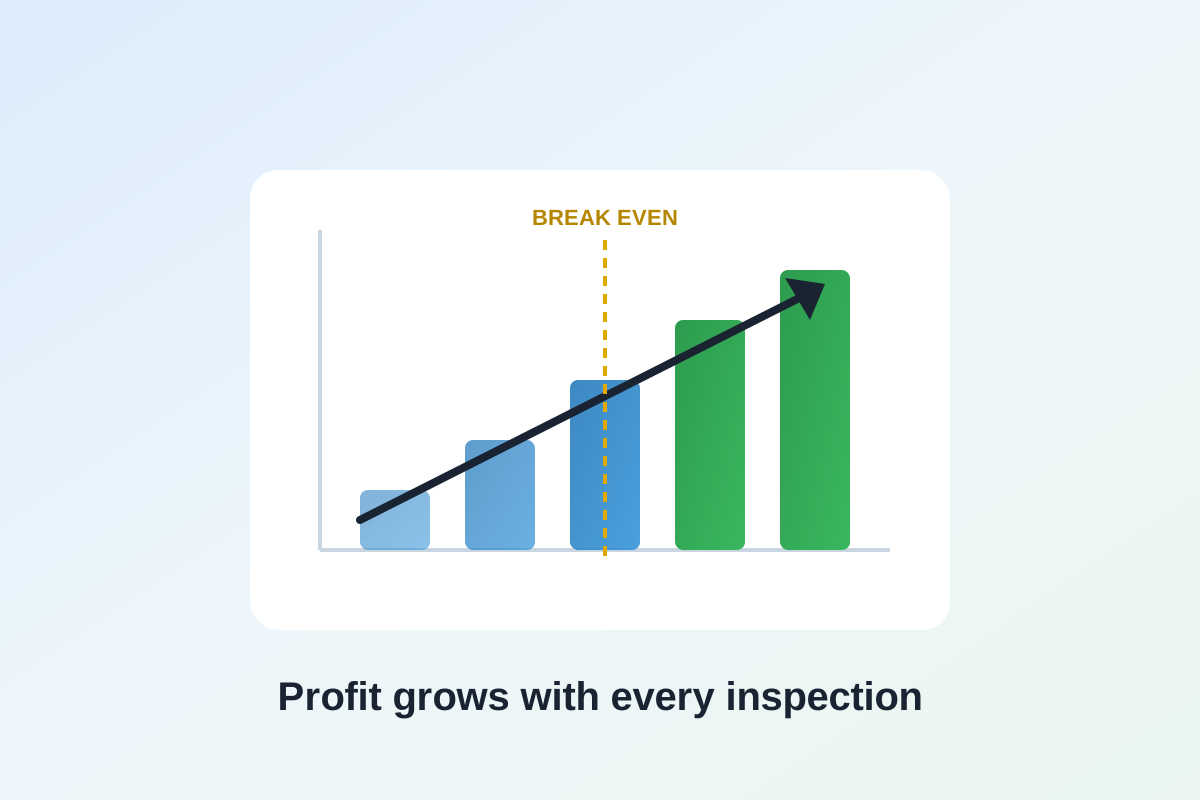
Here is the short answer: yes, a home inspection business can be very profitable, and many owners break even within their first year. Income depends on how many jobs you do and what you charge, but the numbers are strong. According to income data from InspectorPro Insurance, new inspectors earned about $40,057 in 2025, while experienced inspectors averaged $127,557. So the ceiling is high, and the path to profit is real if you keep your costs low and your calendar full.
- Low overhead plus steady demand means most of what you earn can become profit.
- New inspectors averaged $40,057 in 2025; experienced inspectors and small firms averaged $127,557.
- The national average inspection runs about $343 to $400, and add-ons can lift each ticket by $100 or more.
- A lean solo inspector can break even at roughly 4 jobs a month and often within the first year.
Below we break it all down in plain words. We cover what "profitable" really means here, how much inspectors make, what one job pays, your startup and monthly costs, how to find your break-even point, how many jobs you need each month, your profit margin, and whether to start part-time or full-time. We also share simple ways to reach profit faster.
Is a home inspection business actually profitable?
Yes, and here is why. A home inspection business has low overhead compared to most trades. You do not need a store, a big crew, or costly stock on a shelf. Your main tools are your training, a license, some gear, insurance, and good software. That means most of the money you bring in can turn into profit.
The demand is steady too. Buyers want a trusted set of eyes before they spend a huge sum on a home. The National Association of REALTORS reports that the average home inspection cost around $400 in 2025. Multiply that by a full week of jobs and the math starts to look very friendly.
How much money do home inspectors make?
Pay ranges wide, and that is good news, because your effort moves the needle. The U.S. Bureau of Labor Statistics lists a median wage of $74,690 per year for construction and building inspectors in May 2025, based on about 153,900 jobs. That figure covers many kinds of inspectors, not just home inspectors, but it shows a solid middle-class income for the field.
What do new inspectors earn?
New inspectors start lower while they build a name and a referral list. The InspectorPro income data pegs first-year inspectors near $40,057 for the year. That sounds modest, but remember you are still learning, marketing, and filling your schedule. Many new owners work part-time at first and grow from there.
What do experienced inspectors earn?
Once your phone rings on its own, income climbs fast. Experienced inspectors and small firms averaged $127,557 in 2025. The jump comes from more jobs per week, higher fees, repeat agent referrals, and add-on services like radon or mold checks. In short, time and reputation pay off.
How much does one inspection pay?
This is the heart of the business. Per Bankrate, the national average inspection runs about $343, with most buyers paying between $296 and $424. Bigger homes over 2,000 square feet often top $400, while very small homes can dip near $200. Location matters too, so a busy metro can support higher fees than a rural town.
Add-on services push each ticket higher. A radon test, a sewer scope, or a mold check can add $100 or more to a single visit. Stack a few add-ons onto each job and your average revenue per stop grows without adding a whole new appointment.
Add-ons like radon, sewer scope, or mold checks can add $100 or more to a visit you are already making. A few per week lifts your average ticket without adding a single new appointment.
What does it cost to start a home inspection business?
Startup costs are lower than most people fear. You can launch lean and grow as the money comes in. Let us split it into one-time costs and monthly costs so the picture is clear.
What are the one-time startup costs?
Your first big spend is training and a license, which vary by state. After that, you need basic gear and a way to write reports. Common one-time costs include:
- Pre-license training and exam fees.
- State license and application fees.
- Core tools like a flashlight, ladder, moisture meter, and outlet tester.
- A tablet or phone plus reporting software.
- A simple website and a logo.
New to the field? Our guide on how to become a home inspector walks through the license steps state by state, so you know what to budget before day one.
What are the monthly running costs?
Once you are open, your monthly costs stay light. Think insurance, software, phone, gas, and marketing. These are your fixed costs, the bills you pay whether you do one job or twenty. Keeping them low is the fastest way to reach profit, because every dollar over your fixed costs starts to become take-home pay.
What about insurance?
Insurance is a must, and it is more affordable than many expect. Data from Insureon shows home inspectors pay about $82 per month for errors and omissions coverage and roughly $45 per month for general liability. A separate look from biBERK notes rates that start near $600 per year. That is a small price next to the cost of one missed defect, which can run thousands of dollars.
Plan on about $82 per month for errors and omissions and roughly $45 per month for general liability, with some policies starting near $600 per year. One missed defect can cost thousands, so this coverage pays for itself.
How long does it take to break even?
Break-even is the moment your income covers all your costs. For a lean solo inspector, that can happen within the first year, and sometimes within a few busy months. The exact timing depends on your startup spend, your fixed monthly bills, and how fast you fill your calendar.
How do you calculate your break-even point?
The math is simple, and the U.S. Small Business Administration spells it out. Take your fixed costs and divide them by your profit per job. The formula is fixed costs divided by price minus variable costs, which gives you the number of jobs you need to break even. Fixed costs are the bills that stay the same no matter how much you work, like insurance and software.
A simple break-even example
Say your fixed monthly costs are $1,200. That covers insurance, software, phone, and light marketing. Your average job pays $400, and the small variable cost per job (gas, wear, printing) is about $40. That leaves $360 of profit per job. Divide $1,200 by $360 and you get about 4 jobs. So you break even at roughly 4 inspections a month, and every job after that is profit. Most active inspectors do far more than 4 a month, which is why the field can pay so well.
$1,200 in fixed costs, divided by $360 of profit per job ($400 fee minus $40 in variable costs), equals about 4 inspections a month to break even. Every job past that is profit.
How many inspections do you need each month to profit?
Break-even is only the floor. Real profit comes from stacking jobs on top of it. Many solo inspectors aim for 20 to 30 inspections a month once they are established. At an average near $400 per job, that is roughly $8,000 to $12,000 in monthly revenue, before add-ons. Subtract your light fixed costs and a healthy chunk stays in your pocket.
| Inspections per month | Monthly revenue at $400 each |
|---|---|
| 20 (established solo, low end) | $8,000 |
| 25 (mid range) | $10,000 |
| 30 (established solo, high end) | $12,000 |
Revenue is before add-ons and light fixed costs. In the 25-job example below, about $1,200 in fixed costs and $1,000 in variable costs leave roughly $7,800 for the month.
The key is a full and smart schedule. If you can fit two or three jobs into one day, you earn far more without working more days. That is where speed and good tools change your whole month, a point we come back to below.
Here is a quick way to see the profit. Picture 25 jobs in a month at $400 each. That is $10,000 in revenue. Take out about $1,200 in fixed costs and roughly $40 per job in variable costs (gas, printing, wear), or $1,000 total. You are left with about $7,800 for the month. Add a few radon or sewer checks and the number climbs higher. That is why steady bookings, not a huge fee, drive the real payoff.
What profit margin can you expect?
Home inspection is a high-margin business because your costs are small next to your fees. Many solo owners keep a large share of each dollar they earn once their fixed costs are covered. As you add a second or third inspector, your margin per job may shrink a bit because you pay wages, but your total profit grows because you do far more jobs. Either path can work, so choose the one that fits your life.
Should you start part-time or full-time?
Both paths are smart, and the right one depends on your savings and your risk comfort. Starting part-time lets you keep another income while you build referrals and learn the ropes. You can take evening and weekend jobs, then go full-time once your calendar is steady. Starting full-time gets you to volume faster, but you carry more risk in the slow early weeks.
Either way, protect yourself with proper coverage. The steady, flat job outlook from the BLS tells you demand is not going away, so there is time to grow at a pace that feels safe.
What can slow down your break-even?
A few things can stretch your timeline, and most are easy to avoid. Watch out for these:
- Spending too much on fancy gear before the work rolls in.
- A slow marketing start, so agents do not know your name yet.
- Long report editing at home, which caps how many jobs you can take.
- Skipping add-on services that raise your revenue per visit.
- Underpricing your work out of fear, which shrinks your margin.
Fix these and your break-even point arrives faster. The biggest hidden drain is time. Every hour you spend typing a report at the kitchen table is an hour you cannot spend on a paid job.
How does PadInspector help you break even faster?
Profit is really about jobs per day, and jobs per day come down to speed. This is where PadInspector earns its keep. It is voice-driven software for iPad and iPhone. You walk the home and talk, and it transcribes your words, attaches photos to the right area, looks up building-code violations for you, and drafts the full report before you leave the driveway. No more hours of editing at home after a long day.
That saved time is real money. If reports used to eat your evenings, and now they are done in the driveway, you can add another paid inspection to your day. It also logs the weather on inspection day for liability protection, and it works fully offline, so a weak signal never stops you. When you are ready to grow, team mode lets a crew see who inspected what, so you scale without double work. See the full PadInspector feature list to picture your faster day, and check the pricing page to plan the cost against the extra jobs you can take.
The bottom line: is it worth it?
For most people, yes. A home inspection business has low costs, steady demand, and a fast path to break even. New inspectors can start lean, part-time even, and grow into six-figure income as their name spreads. The math is friendly: cover a small set of fixed costs, then keep most of every fee that follows.
PadInspector is invite-only while we grow with care. If you want to finish reports faster, take more jobs, and reach profit sooner, request an invite and see how much time you get back.
Frequently asked questions
Is a home inspection business profitable?+
Yes. It has low overhead and steady demand, so most of what you earn can turn into profit. New inspectors averaged about $40,057 in 2025, while experienced inspectors and small firms averaged $127,557. Income grows as you take more jobs and build referrals.
How long does it take to break even?+
A lean solo inspector can break even within the first year, sometimes within a few busy months. It depends on your startup spend and your fixed monthly bills. With a $400 average fee and low fixed costs, many owners break even at only a handful of inspections per month.
How much does it cost to start a home inspection business?+
Startup costs are lower than many expect. Your main one-time costs are training, a state license, basic gear, a tablet, and reporting software. Monthly costs are light, mostly insurance, software, phone, and marketing, so you can launch lean and grow as jobs come in.
How much does one home inspection pay?+
The national average is about $343, with most jobs falling between $296 and $424, according to Bankrate. Bigger homes often top $400, and add-on services like radon or sewer checks can add $100 or more per visit. Location and home size move the price too.
How many inspections do I need each month to make money?+
Break-even can be as low as a handful of jobs per month once fixed costs are covered. Many established solo inspectors do 20 to 30 inspections a month, which can mean roughly $8,000 to $12,000 in monthly revenue before add-ons. Every job past break-even is profit.
Should I start part-time or full-time?+
Both work. Part-time lets you keep another income while you build referrals and learn the trade, then go full-time once your calendar is steady. Full-time reaches high volume faster but carries more risk in the slow early weeks. Choose the pace that fits your savings and comfort.
How can I break even faster?+
Keep fixed costs low, market early so agents know your name, price your work fairly, and add services like radon or mold checks. The biggest lever is time. Finishing reports on-site instead of at home lets you take more paid jobs per day and reach profit sooner.
Sources
- InspectorPro Insurance: How Much Does a Home Inspector Make
- U.S. Bureau of Labor Statistics: Construction and Building Inspectors
- National Association of REALTORS: How Much Does a Home Inspection Cost in 2025
- Bankrate: How Much Does a Home Inspection Cost
- Insureon: Home Inspector Insurance Cost
- biBERK: Home Inspector E&O Insurance Cost
- U.S. Small Business Administration: Break-Even Point
Spend less time on reports, more time inspecting
PadInspector turns your voice into a finished inspection report before you leave the driveway. See how the voice-to-report workflow works.