
How much should a new home inspector charge: flat fee vs. by square foot?
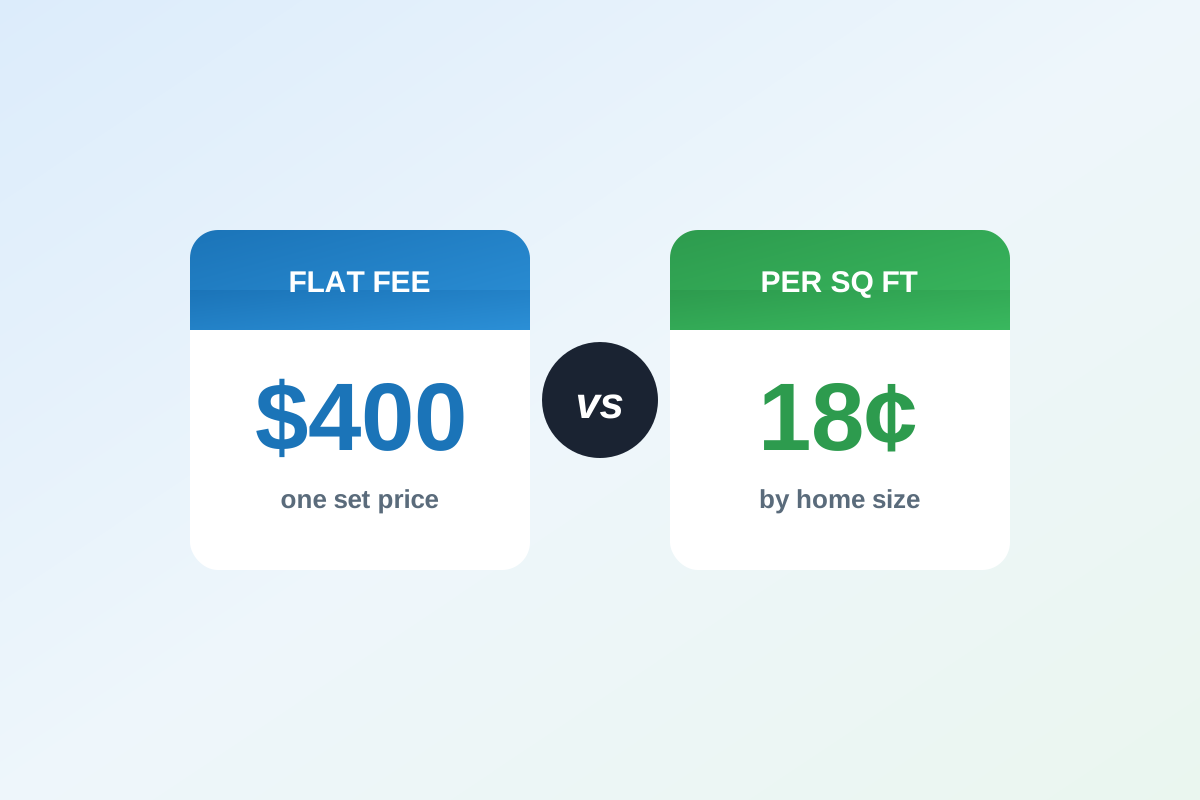
Here is the short answer for a new home inspector: most charge a base flat fee of about 300 to 350 dollars for a standard home up to 2,000 square feet, then add more for bigger or older houses. If you price by size instead, the common range is about 15 to 30 cents per square foot. According to home-buying data from AmeriSave, a standard inspection runs around 343 dollars on average, with per-square-foot rates from 0.15 to 0.30 and a flat-fee path of roughly 350 dollars for the first 2,000 square feet plus about 25 dollars per extra 500 square feet. So both models can land at a fair price. The trick is picking the one that fits your market and your goals.
Below we break down each pricing model in plain words. We cover what a flat fee is, what per-square-foot means, the real pros and cons of each, the model most inspectors actually use, how to set your rate, how to price add-ons, and how faster reports help you earn more. Let us dig in.
- A standard inspection averages about 343 dollars in 2026, with most buyers paying 296 to 424 dollars.
- Flat fee means one set base price (often near 350 dollars); per-square-foot ties the fee to home size (commonly 15 to 30 cents).
- Most working inspectors blend both: a flat base up to 2,000 square feet, then a set amount per extra 500 square feet.
- Add-ons like radon, termite, and sewer are where a lot of your profit lives.
What is the average home inspection fee right now?
Before you set your own price, you need a starting point. A standard single-family home inspection costs about 343 dollars on average in 2026. Most buyers pay somewhere in a tight band. A bank explainer from PNC puts the typical range at 296 to 424 dollars, with price shifting by location and home size.
The full spread is wider than that once you count tiny condos and giant estates. Small homes under 1,000 square feet can start near 200 dollars. Big homes over 3,000 square feet can pass 500 dollars fast. Your job is to build a price list that covers your costs and matches what buyers in your town expect.
What is a flat fee, and how does it work?
A flat fee is one set price for a standard inspection. You pick a number, say 350 dollars, and that is what a normal home costs. You can still add charges for extras like a pool or a second unit, but the base is fixed. This makes quoting easy. A client calls, you say the price, and you book the job.
Many new inspectors like flat pricing because it is simple to market and simple to plan around. If you know your flat fee and how many jobs you can do in a week, you can guess your income for the month with little math.
What are the pros of flat-fee pricing?
- Fast quotes: you can give a price by phone or text in seconds.
- Easy budgeting for clients: buyers know the number up front.
- Simple income forecasts: price times jobs equals your week.
- Clean marketing: one clear number is easy to advertise.
What are the cons of flat-fee pricing?
- Big homes eat your time: a 4,000 square foot house takes far longer, but a pure flat fee pays the same.
- You can leave money on the table on large jobs.
- You may scare off small-home buyers if your one price feels high for a tiny condo.
What is per-square-foot pricing, and how does it work?
Per-square-foot pricing ties your fee to the size of the home. You pick a rate, like 18 cents, and multiply it by the living area. A 2,000 square foot home at 18 cents would be 360 dollars. A 3,000 square foot home at the same rate would be 540 dollars. Bigger house, bigger check.
This model feels fair to a lot of clients because they pay for the work their home actually needs. It also protects you on large homes, since your fee grows with the square footage and the extra hours you spend walking the property.
What are the pros of per-square-foot pricing?
- Fair pay for big homes: your fee scales with the time you spend.
- Lower entry price for small homes, which can win budget-minded buyers.
- Clear logic: clients see why a larger home costs more.
What are the cons of per-square-foot pricing?
- Quotes take a step: you need the square footage before you can price the job.
- It can confuse some buyers who just want one number.
- Size alone misses other cost drivers, like a very old home that needs extra care.
Flat fee vs per square foot at a glance
| Factor | Flat fee | Per square foot |
|---|---|---|
| How it is priced | One set base price (say 350 dollars) | A rate times living area (say 18 cents) |
| Example, 2,000 sq ft home | 350 dollars | 360 dollars at 18 cents |
| Example, 3,000 sq ft home | Same base unless you add for size | 540 dollars at 18 cents |
| Speed to quote | Instant, by phone or text | Needs the square footage first |
| Best for big homes | Can undercharge for the time spent | Fee scales with the work |
| Best for small homes | One price may feel high for a tiny condo | Lower entry price wins budget buyers |
Which model do most inspectors actually use?
Here is the honest truth: most working inspectors blend both. They set a flat base rate for homes up to about 2,000 square feet, then add a set amount for every 500 square feet after that. This gives you the easy quote of a flat fee and the fair scaling of per-square-foot pricing.
A flat base up to 2,000 square feet plus a set amount per extra 500 square feet gives you the fast quote of flat pricing and the fair scaling of per-square-foot pricing in one price list.
The trade publication Working RE gathered real pricing habits from inspectors, and in their piece on how inspectors establish fees, several charge around 13 to 17 cents per square foot, add a few dollars per year for older homes, and tack on small fees for pools, spas, and travel. Many keep a minimum price so a tiny job is still worth the drive. The lesson is that a smart price list mixes a base, a size factor, and a few clear add-ons.
How do you set your base rate as a new inspector?
Do not just copy the inspector down the street. Build your rate from your own numbers first, then check it against the market. Here is a simple way to do it.
Know your true cost of doing business
Add up everything it costs to run your business for a year: insurance, software, gas, tools, licensing, marketing, and taxes. Divide by the number of jobs you expect to do. That is the floor your price must clear. The Working RE inspectors made the same point: roughly one-third of a typical fee goes to running the business, so you need to know that number before you set a price.
Check what your local market charges
Once you know your floor, look at your area. Call a few inspectors for a quote on a standard 2,000 square foot home. Note the range. In lower-cost regions your base might sit near 300 dollars, while pricier metros can run 450 dollars or more. Detroit-area inspections, for example, land around 300 dollars, while parts of New Jersey push past 430 dollars. Aim to price within a short distance of the local average unless you offer something special.
Price for the income you want
Your fee should also match your income goal. Salary data from Salary.com shows the average home inspector earns about 60,867 dollars a year, or around 29 dollars an hour, with entry-level pay near 48,000 dollars. The government sees the wider trade in a similar light. The Bureau of Labor Statistics reports a median wage of 74,690 dollars for construction and building inspectors in May 2025. Work backward from the income you want to the fee and job count you need to hit it.
How should you price add-ons like radon and termite tests?
Add-ons are where a lot of your profit lives. A standard inspection covers the main systems, but many buyers also want radon, termite, mold, or sewer checks. These are separate services with separate prices, and they can lift your average ticket by 100 dollars or more.
Radon is a common request, and for good reason. The EPA and the U.S. Surgeon General recommend that every home be tested, and the FHA even requires that buyers get a radon notice. A professional radon test for a sale often runs about 200 to 500 dollars because of the tamper controls a deal needs. Termite checks usually run 75 to 150 dollars, sewer scopes 150 to 300 dollars, and mold testing 300 to 700 dollars. Set a clear price for each and list them on your site.
List radon (200 to 500 dollars), termite (75 to 150 dollars), sewer scope (150 to 300 dollars), and mold (300 to 700 dollars) with clear prices so buyers can add them at booking.
A simple add-on menu example
- Radon test: priced by your local market and lab cost.
- Termite or wood-destroying insect report: a flat add-on.
- Sewer scope: a flat add-on for the camera run.
- Pool or spa, second unit, or outbuilding: a small extra each.
How do home size and age change your price?
Size and age are the two biggest cost drivers after the base fee. A larger home has more rooms, more systems, and more roof to walk, so it takes more time. That is why base fees climb with square footage, often 300 dollars up to 2,000 square feet, 400 dollars up to 3,000, and 500 dollars or more above that.
Age matters too. An older home tends to have worn wiring, dated plumbing, and more small defects to document. Many inspectors add a few dollars for each year a home is over 25 or 30 years old. This protects the extra time you will spend writing up an older property.
What do buyers actually get for the fee?
It helps to explain the value behind your price, because a clear value makes your fee feel fair. A home inspection is a close look at the home's real condition. The CFPB reminds buyers that an inspection is for their protection and is different from an appraisal, which only sets a value for the lender.
A standard inspection checks the roof, foundation, structure, electrical, plumbing, heating and cooling, attic, and safety items like smoke detectors. It usually does not include hidden pests, radon, mold, or the inside of the sewer line, which is why those are add-ons. When a buyer understands all this, your fee reads as money well spent, not just a line item.
How can PadInspector help you charge more and inspect more?
Your price is only half of the profit story. The other half is how many jobs you can do and how fast you finish the report. Many inspectors spend hours at home each night typing up notes. That is time you could spend on the next paid job. PadInspector was built to give that time back.
PadInspector is voice-driven software for iPad and iPhone. You walk the home and talk, and it writes down your words, attaches photos to the right area, looks up building-code violations for you, and logs the weather that day for your own liability protection. It drafts the full report before you leave the driveway. It also works fully offline, so a weak signal never stops you, and team mode lets a crew see who inspected what.
Faster reports mean you can fit more inspections into a day, which supports both pricing models. When each job takes less office time, you can raise your effective hourly rate without raising your fee. The PadInspector feature list shows how the app speeds up your day, and the pricing page lays out plans in plain terms so you can match your tools to your income goals.
PadInspector is invite-only while we grow with care. If you are a new inspector who wants to set a smart price and finish reports faster, request an invite and see how much time you get back.
Frequently asked questions
Should a new home inspector charge a flat fee or by the square foot?+
Most new inspectors do best with a blend. Set a flat base rate for a home up to about 2,000 square feet, then add a set amount for every extra 500 square feet. This keeps quotes fast and simple while making sure big homes pay for the extra time they take.
What is the average home inspection fee in 2026?+
A standard single-family home inspection costs about 343 dollars on average in 2026. Most buyers pay between 296 and 424 dollars, though small homes can start near 200 dollars and large homes can pass 500 dollars. Location and home size are the biggest swing factors.
How much do inspectors charge per square foot?+
Per-square-foot rates commonly run from about 13 to 30 cents. At 18 cents, a 2,000 square foot home would cost 360 dollars, and a 3,000 square foot home would cost 540 dollars. Pick a rate that clears your costs and matches your local market.
How do I figure out my base rate as a new inspector?+
Start with your true cost of doing business, including insurance, software, gas, and taxes, since about a third of a typical fee covers those costs. Then check what local inspectors charge for a standard 2,000 square foot home and price within a short distance of that average unless you offer something special.
How much should I charge for add-ons like radon or termite tests?+
Add-ons are priced separately from the base fee. A radon test for a sale often runs 200 to 500 dollars, termite reports run 75 to 150 dollars, sewer scopes run 150 to 300 dollars, and mold testing runs 300 to 700 dollars. List each add-on with a clear price so buyers know what to expect.
How much do home inspectors make?+
The average home inspector earns about 60,867 dollars a year, or around 29 dollars an hour, with entry-level pay near 48,000 dollars. The Bureau of Labor Statistics reports a median wage of 74,690 dollars for the wider construction and building inspector trade in May 2025. Your income depends on your fee, your job count, and your costs.
Does home age affect how much I should charge?+
Yes. Older homes usually have worn systems and more small defects to document, which adds time to both the walkthrough and the report. Many inspectors add a few dollars for each year a home is over 25 or 30 years old to cover that extra work.
Sources
Spend less time on reports, more time inspecting
PadInspector turns your voice into a finished inspection report before you leave the driveway. See how the voice-to-report workflow works.