How much does a home inspection cost, and who pays for it?
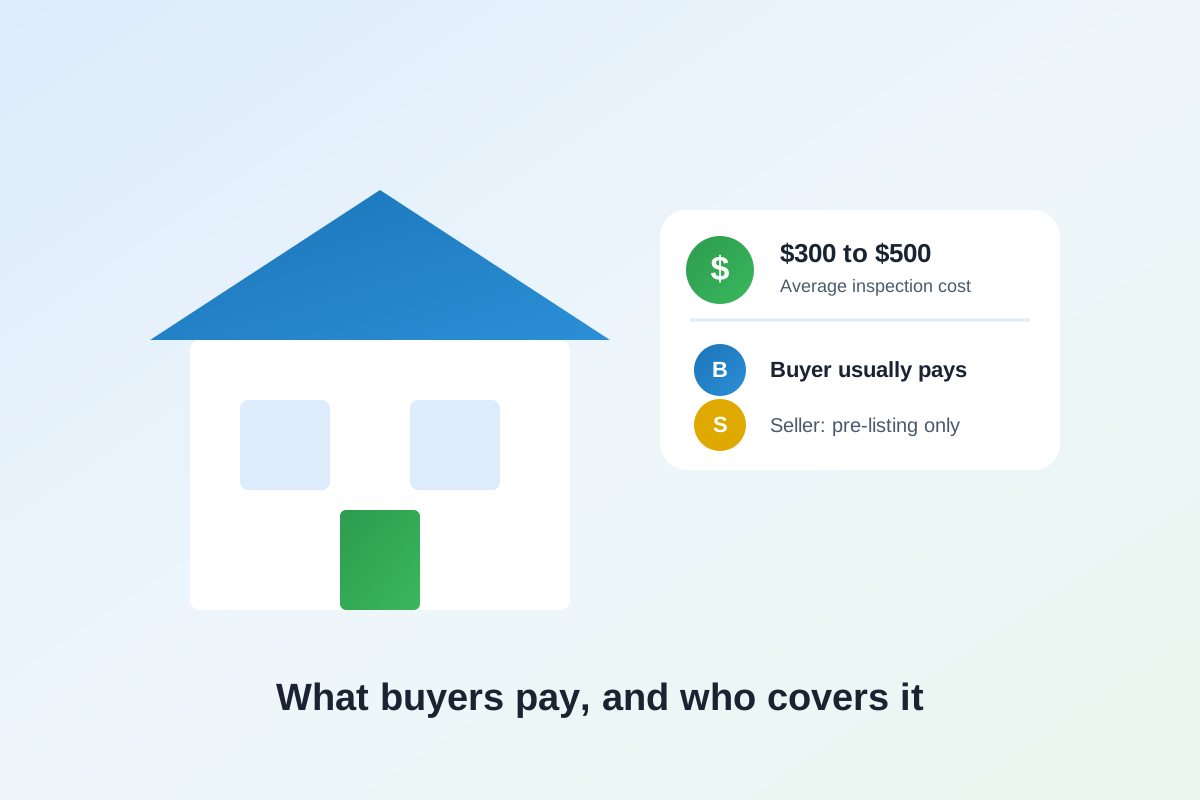
A home inspection usually costs between $300 and $500, with a national average around $343, according to Bankrate's 2026 cost data. In almost every home sale, the buyer pays for it, since the inspection protects the buyer's own decision to move forward with the purchase. Sellers only pay in a few specific cases, like when they order their own pre-listing inspection. Below, we break down real price ranges, what changes the cost, and exactly who writes the check.
Buying a home is exciting, and it can also feel like a pile of surprise fees. The inspection is one of the few costs that is actually worth every dollar, because it can save you far more than it costs. Let's look at the real numbers so you know what to expect and how to budget for it.
- A standard home inspection runs about $300 to $500, with a national average near $343.
- The buyer pays in almost every deal, since the inspection protects the buyer's own decision to buy.
- Sellers only pay in special cases, like ordering their own pre-listing inspection.
- Add-ons like radon, mold, or a sewer scope add roughly $100 to $500 on top.
- Buyers who negotiated with inspection findings saved an average of $14,000, per a Porch.com survey.
What does a home inspection cost on average?
Most buyers pay somewhere between $300 and $500 for a standard, whole-home inspection. Bankrate's research puts the national average at $343, with a typical range of $296 to $424 depending on where you live and how big the home is. Smaller condos can run as low as $200, while large homes over 3,000 square feet often land between $500 and $800.
That fee usually covers a licensed inspector spending two to four hours walking the property, checking the roof, foundation, plumbing, electrical system, heating and cooling, and general safety issues. You get a written report, often with photos, within a day or two.
| Home type | Typical inspection cost |
|---|---|
| Small condo (about 1,000 sq ft) | Around $200 |
| Typical home (national average) | $296 to $424, average $343 |
| Large home (over 3,000 sq ft) | $500 to $800 |
Who pays for a home inspection, buyer or seller?
In almost every traditional sale, the buyer pays for the home inspection. HomeLight explains that the inspection is designed to help the buyer decide whether to move forward with the purchase, so it makes sense that the buyer covers the bill. Most buyers pay before or on the day of the inspection, directly to the inspector, not at closing.
Why does the buyer usually pay?
The inspection exists to protect the buyer. It gives you a clear, independent look at the home's condition before you are locked into the deal. Since you are the one making the decision, and the one who could walk away or ask for repairs, it only makes sense that you are the one who hires and pays the inspector. This also keeps the inspection unbiased, since the seller has no say in choosing who does it.
When does the seller pay for an inspection?
There are a few situations where the seller pays instead. According to Chase's home buying guide, sellers sometimes order a pre-listing inspection before putting the house on the market. This lets them fix small problems early and avoid surprises once a buyer's inspector shows up. A seller might also agree to pay for a specific follow-up inspection, like a second look at a repair, as part of negotiations after the buyer's original inspection turns up an issue. In every case, this is a choice the seller makes, not a standard rule.
What affects the price of a home inspection?
Several things push the price up or down. Knowing them ahead of time helps you avoid sticker shock.
Home size and age
Bigger homes take longer to inspect, so they cost more. A 1,000-square-foot condo might cost $200, while a 3,500-square-foot house can run $500 to $800. Older homes also tend to cost more, because outdated wiring, older plumbing, and aging roofs take extra time to check carefully.
Location
Where you live matters a lot. Bankrate notes that buyers in Hartford, Connecticut pay an average of $489, while buyers in Detroit tend to pay closer to $300. Labor costs, local licensing rules, and even how competitive the local inspector market is all shape the price in your area.
Extra add-on inspections
A standard inspection does not cover everything. Things like radon, mold, sewer lines, and termites usually cost extra, and we break those down next.
How much do add-on inspections cost?
If your home has an older sewer line, sits in a high-radon area, or shows signs of pests, you may want to add one or more of these to your basic inspection.
Radon testing
Radon is a gas you cannot see or smell, and it is a real health risk in many parts of the country. A radon add-on typically costs $100 to $250 when it is bundled with your main inspection, according to Redfin's guide to radon testing. The National Radon Program Services recommends testing every home during a real estate sale, no matter where it is located, since radon levels can vary even between houses on the same street.
Mold inspection
A dedicated mold inspection often runs a few hundred dollars more than a standard visual check, and it usually involves air or surface samples sent to a lab. It is worth adding if you spot water stains, a musty smell, or a history of flooding.
Sewer scope
A sewer scope sends a small camera down the main sewer line to check for cracks, roots, or blockages. This is one of the pricier add-ons, since it takes special equipment, but it can save you from a very expensive surprise after you move in, especially in a home with an older sewer line.
Termite and pest inspection
A termite or wood-destroying insect inspection is one of the cheaper add-ons, and lenders sometimes require it, especially on VA loans in areas with a history of termite damage.
Foundation inspection
If the main inspector spots cracks, uneven floors, or doors that stick, they may recommend a deeper foundation inspection from a structural specialist. This costs more than the other add-ons, but it is money well spent before you commit to a home with a shaky foundation.
Do FHA and VA loans require a home inspection?
Not exactly. Per Lower's breakdown of inspection requirements by loan type, FHA loans do not require a full home inspection, and VA loans do not require one either, though both strongly recommend getting one. What these loans do require is an appraisal, which is a different thing: an appraisal checks the home's value for the lender, while an inspection checks the home's condition for you. Even when it is optional, skipping the inspection to save a few hundred dollars is a gamble most buyers should not take.
An appraisal checks the home's value for your lender. An inspection checks the home's condition for you. FHA and VA loans require the appraisal, not the inspection, but skipping the inspection leaves you with no independent read on the home.
Can you negotiate who pays for the inspection?
Yes, in some cases. While the buyer almost always pays for their own inspection, the results of that inspection often become a big part of the back-and-forth that follows. If the inspector finds a bad roof or an old water heater, you can ask the seller for a price reduction, a repair, or a credit at closing to cover the fix. The Consumer Financial Protection Bureau points out that scheduling your inspection early gives you more time to negotiate before your other deadlines hit. Whether the inspection fee itself gets folded into your closing costs depends on the inspection company and your lender, since there is no single rule that applies everywhere, according to LendingTree's home inspection guide.
How much should you budget for a home inspection as a buyer?
Plan for $300 to $500 for the main inspection, plus another $100 to $500 if you add radon, mold, or a sewer scope. That puts a realistic total somewhere between $400 and $1,000 for a well-rounded look at the home. Pay this out of pocket, separate from your down payment and closing costs, since most inspectors expect payment on the day of the inspection rather than at closing.
It also helps to ask upfront exactly what is included. Some inspectors bundle radon or termite checks into one flat fee, while others charge each one separately. Getting a clear, itemized quote before you book keeps you from being surprised on inspection day.
Before you book, ask the inspector to list the base fee and each add-on separately. That one question tells you whether radon, termite, or sewer checks are bundled in or billed on top, so nothing surprises you on inspection day.
Is a home inspection worth the cost?
For most buyers, yes, and often by a wide margin. A Porch.com survey cited by Bankrate found that buyers who used their inspection findings to negotiate saved an average of $14,000 off the purchase price. Even setting negotiation aside, an inspection can catch a failing roof, hidden water damage, or an unsafe electrical panel before you are stuck with the repair bill. Spending a few hundred dollars to avoid tens of thousands in surprise repairs is one of the easiest trade-offs in the entire home buying process.
How does the quality of your inspector's report affect your money?
Not every inspection report is equally useful. A thin, vague report with a few blurry photos gives you very little to negotiate with. A detailed report with clear photos of every problem area, organized room by room, gives you real leverage and real peace of mind.
This is where the tools your inspector uses start to matter. Inspectors who use modern software like PadInspector walk the home and talk out loud, and the app transcribes their notes, attaches photos to the right room automatically, and even checks for building-code issues as they go. It also logs the weather on inspection day, which matters if a roof or drainage problem shows up later and someone asks whether it had actually rained recently. The result for you as a buyer is a clearer, faster, better-documented report, often ready before the inspector even leaves the driveway, instead of a report that trickles in days later after the inspector gets around to typing it up at home. You can see the full list of what this kind of software does on the PadInspector features page.
If you are shopping for an inspector, it is fair to ask what tools they use to build your report. A faster, sharper report does not cost you anything extra, and it can make the difference between catching a real problem and missing it.
FAQ: home inspection cost and who pays
Does the buyer or seller pay for a home inspection?
The buyer pays in almost every case, since the inspection exists to protect the buyer's decision to purchase the home. Sellers sometimes pay for their own pre-listing inspection, but that is a separate, optional step they take before listing the home.
How much does a home inspection cost on average?
The national average is about $343, with most buyers paying between $296 and $424. Smaller condos can cost as little as $200, while large homes over 3,000 square feet often run $500 to $800.
Can I ask the seller to pay for my inspection?
You can ask, but it is not standard practice, and most sellers will say no to paying for the buyer's own due-diligence inspection. What is common is asking the seller for a credit or repair after the inspection turns up a problem.
Do I have to pay for the inspection before closing?
Yes, in most cases you pay the inspector directly on or shortly after inspection day, not at your closing table. Whether the fee shows up as a line item in your closing costs depends on the inspection company and your lender.
Is a radon or mold test included in a standard inspection?
No, these are usually add-ons. A standard inspection covers the home's main systems and structure, while radon, mold, and sewer scope tests cost extra and need to be requested separately.
Is it worth paying extra for a sewer scope or radon test?
Often, yes, especially in an older home or a home with a history of plumbing issues, or in an area known for higher radon levels. These add-ons cost a few hundred dollars but can catch problems that would otherwise cost thousands to fix after you move in.
What happens if I skip the home inspection to save money?
You take on the full risk of any hidden problems with the home, from a bad roof to faulty wiring, since there will be no independent report backing you up in a negotiation or a future dispute. Most real estate professionals recommend never skipping this step, even in a fast-moving market.
If you are working with an inspector, ask whether they use modern reporting tools that produce a clear, well-documented report you can actually understand and use in a negotiation. Inspectors who rely on apps like PadInspector, built for voice-driven, photo-per-area reporting with automatic code checks, tend to hand buyers a sharper report, faster. Inspectors interested in trying it can request an invite to see it in action.
Frequently asked questions
Does the buyer or seller pay for a home inspection?+
The buyer pays in almost every case, since the inspection exists to protect the buyer’s decision to purchase the home. Sellers sometimes pay for their own pre-listing inspection, but that is a separate, optional step they take before listing the home.
How much does a home inspection cost on average?+
The national average is about $343, with most buyers paying between $296 and $424. Smaller condos can cost as little as $200, while large homes over 3,000 square feet often run $500 to $800.
Can I ask the seller to pay for my inspection?+
You can ask, but it is not standard practice, and most sellers will say no to paying for the buyer’s own due-diligence inspection. What is common is asking the seller for a credit or repair after the inspection turns up a problem.
Do I have to pay for the inspection before closing?+
Yes, in most cases you pay the inspector directly on or shortly after inspection day, not at your closing table. Whether the fee shows up as a line item in your closing costs depends on the inspection company and your lender.
Is a radon or mold test included in a standard inspection?+
No, these are usually add-ons. A standard inspection covers the home’s main systems and structure, while radon, mold, and sewer scope tests cost extra and need to be requested separately.
Is it worth paying extra for a sewer scope or radon test?+
Often, yes, especially in an older home, a home with a history of plumbing issues, or an area known for higher radon levels. These add-ons cost a few hundred dollars but can catch problems that would otherwise cost thousands to fix after you move in.
What happens if I skip the home inspection to save money?+
You take on the full risk of any hidden problems with the home, from a bad roof to faulty wiring, since there will be no independent report backing you up in a negotiation or a future dispute. Most real estate professionals recommend never skipping this step, even in a fast-moving market.
Sources
- Bankrate: How Much Does a Home Inspection Cost?
- HomeLight: Who Pays for a Home Inspection, Buyer or Seller?
- Chase: Who Pays for Home Inspection and Repairs
- Lower: Home Inspection Requirements By Loan Type
- Redfin: Should You Get Radon Testing With a Home Inspection?
- National Radon Program Services: Radon Testing in Real Estate
- Consumer Financial Protection Bureau: Essential Steps to Close on Your Home
- LendingTree: Home Inspection Guide
Spend less time on reports, more time inspecting
PadInspector turns your voice into a finished inspection report before you leave the driveway. See how the voice-to-report workflow works.