
Do home inspectors check for mold, radon, foundation, and the sewer line?
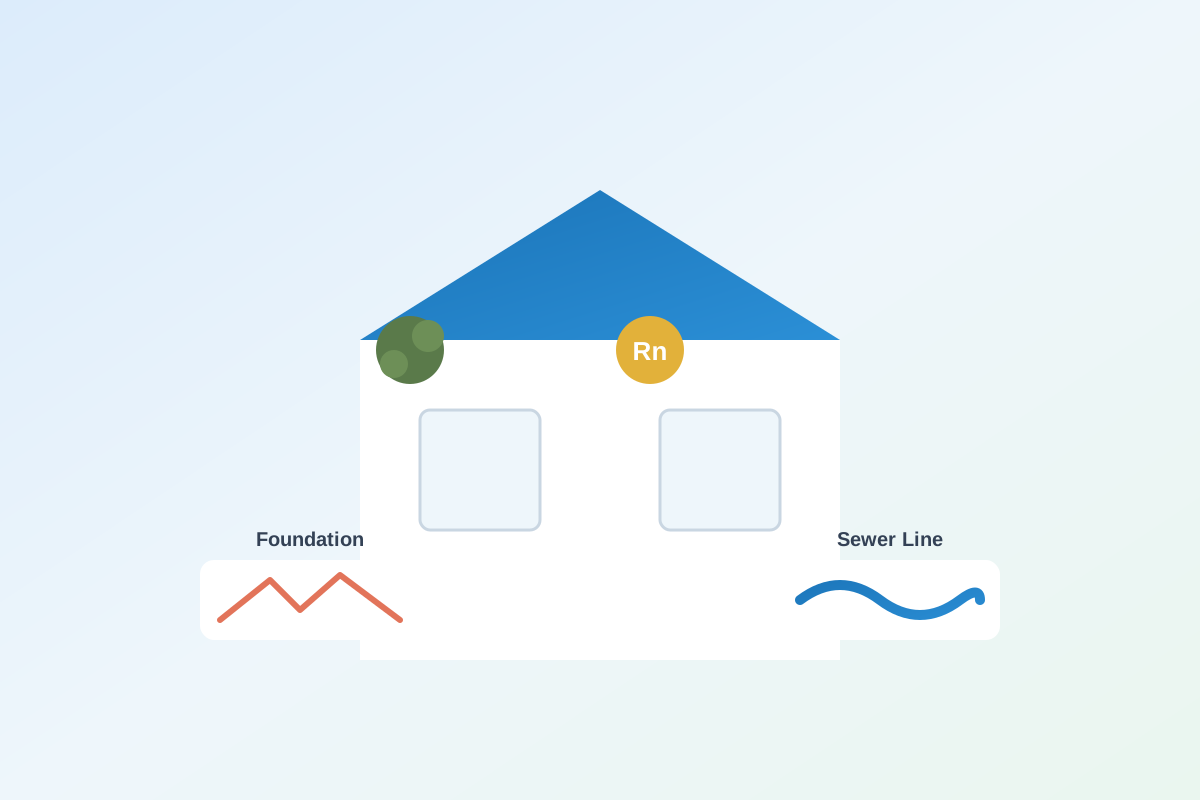
Short answer: no, not fully. A standard home inspection does not test for mold, does not test for radon, and does not run a camera down the sewer line. The foundation is different: your inspector will look at it, but only the parts they can see with their own eyes. Per the InterNACHI Standards of Practice, mold and radon sit in a list of items an inspector is not required to check, and sewer or septic systems are excluded too. That one line answers most of the confusion buyers and even some new inspectors have about what a walk-through really covers.
This mix-up causes real problems. Buyers assume a "passed" inspection means the whole house, top to bottom, inside the pipes, is clean. It does not mean that. Below, we walk through mold, radon, foundation, and the sewer line one at a time, in plain words, so you know exactly what a standard inspection includes, what it skips, and when to call in a specialist.
- A standard inspection does not test for mold, does not test for radon, and does not scope the sewer line.
- The foundation is the one item on this list a general inspection covers, but only what is visible.
- Mold, radon, and sewer scope are optional add-ons you have to request, not part of the base fee.
- Foundation cracks get flagged and deferred to a structural engineer, not diagnosed on the spot.
If a topic is not on the ASHI or InterNACHI Standards of Practice, it is usually a specialty add-on, not part of the base inspection.
What is a standard home inspection, really?
A standard home inspection is a visual, non-invasive check of a home's major systems and structure. The inspector walks the property, looks at the roof, the attic, the electrical panel, the plumbing, the HVAC system, and the visible parts of the foundation, then writes up what they find. They do not cut open walls, dig up yards, or run lab tests.
Two groups write the rulebook most inspectors follow in the United States: ASHI and InterNACHI. Both publish a Standards of Practice document that spells out exactly what is required and what is left out. If a topic is not on that list, it is usually a specialty add-on service, not part of the base inspection.
Does a home inspection check for mold?
No, not as a lab test. A general inspector will point out anything that looks like it might be mold, because a good inspector notes anything unusual. But finding actual mold, naming the species, or testing air quality is outside the job. The ASHI Standard of Practice, hosted on the ASHI Standards of Practice page, lists "molds and mold-like substances" among the items an inspector is not required to determine. InterNACHI's rulebook says the same thing in its exclusions section.
Why do inspectors skip mold testing?
The CDC's guidance on mold actually discourages testing in most cases. The agency explains that health reactions to mold vary so much from person to person that a test result cannot predict whether it will make you sick. There is also no official safe limit for mold spores in a home, so a lab number would not mean much anyway. The CDC's real advice is simpler: if you can see or smell mold, clean it up and fix the moisture problem causing it, whether or not you ever test it.
What will an inspector actually tell you about mold?
If your inspector spots a suspicious stain, a musty smell, or visible growth in a crawl space or basement, most reports will flag it as "apparent mold" or a "conducive condition" and suggest a certified mold assessor take a closer look. That flag alone is valuable. It tells you where the moisture is coming from, which is the real root cause. A separate homebuyer guide on what inspections skip confirms that buyers usually need to hire a certified mold inspector for anything beyond that first flag.
Does a home inspection check for radon?
No, radon testing is a separate, add-on service almost everywhere. It is such a common question that we are answering it directly: a general home inspector's walk-through does not include a radon test unless you specifically pay for one. Radon is a colorless, odorless gas that seeps up from the ground, and the only way to know your level is to actually measure it.
Why does radon matter so much?
According to the CDC's page on radon testing, the average American home sits around 1.3 pCi/L, and the EPA recommends fixing your home if a test comes back at 4 pCi/L or higher, with action worth considering as low as 2 pCi/L. There is no truly "safe" level, which is why the CDC calls testing the only reliable way to know what is in your air.
How is a radon test different from a home inspection?
Radon testing follows its own set of technical rules, separate from home inspection standards. The EPA's radon standards of practice page points to ANSI/AARST consensus standards built specifically for radon measurement professionals, with extra requirements for anyone doing the testing as part of a paid service. A short-term kit sits in the home for two to ninety days, placed about three feet off the floor in the lowest livable level, which is a very different process than an inspector's one-visit walk-through.
Does a home inspection check the foundation?
Yes, partly. This is the one item on the list that a standard inspection does cover, but with an important limit: the inspector only checks what they can see. They will look for cracks, uneven floors, water stains, and signs of settling in the foundation walls and crawl space. What they will not do is dig, drill, or run engineering calculations on the soil underneath your home.
What is the difference between an inspector and a structural engineer here?
A useful way to think about it: your home inspector tells you something looks off and deserves a second look, while a structural engineer tells you why it happened and how to fix it. Per an engineering firm's explainer on foundation inspections, a home inspector's note is a deferral, not a diagnosis: a line like "cracks noted in foundation wall, recommend further evaluation" simply flags the issue. A structural engineer follows up with actual crack-width measurements and a stamped report that tells you whether the movement is old and stable or new and active.
When should you call in a structural engineer?
If your inspector flags stair-step cracks, doors that stick, floors that visibly slope, or gaps around windows, that is your cue to book a structural engineer before closing. Waiting can turn a few hundred dollars of monitoring into a much bigger repair bill later, so treat that flag as a real deadline, not a suggestion to file away.
Does a home inspection check the sewer line?
No. The sewer or septic line that runs from your house to the street or to a septic tank is buried and out of sight, so it falls outside a standard inspection every time. This is one of the most commonly missed gaps buyers run into, because a "clean" inspection report can still hide a cracked, root-clogged, or collapsing sewer line.
Because the line is buried, a passing inspection tells you nothing about it. On older homes, book a separate sewer scope before you close.
How do you actually check a sewer line?
The only real way to see inside a sewer line is a sewer scope: a small waterproof camera fed through a cleanout pipe or drain to record the full length of the line. It is a completely separate, specialized service. Even InterNACHI's own page on sewer scope inspections says plainly that scoping "is not required by InterNACHI's Home Inspection Standards of Practice," which is exactly why it has to be booked on top of the base inspection, not inside it.
Why is a sewer scope worth the extra step?
Sewer line problems are expensive and easy to miss until they are already bad. Older clay pipes crack, tree roots grow into joints, and none of it shows up above ground until a backup happens. Since it is not part of the base scope described in the National Association of REALTORS consumer guide to home inspections, buyers of older homes especially should treat a sewer scope as a smart, separate line item rather than an assumption baked into the main report.
So what does a standard inspection cover, and what does it skip?
Here is the short version, gathered straight from what we covered above:
| Item | In a standard inspection? | Who handles the deeper check |
|---|---|---|
| Mold | Flagged if visible, not tested | Certified mold assessor |
| Radon | No, separate add-on | Radon measurement pro (ANSI/AARST) |
| Foundation | Yes, visual only | Structural engineer for diagnosis |
| Sewer line | No, buried and out of sight | Sewer scope camera service |
| Roof, attic, electrical, plumbing, HVAC | Yes, visible parts | Included in the base visit |
In plain terms: the base visit covers visible structure, roof, attic, exterior, plumbing fixtures, the electrical panel and outlets, heating and cooling, and a visual look at the foundation. Mold, radon, and sewer scope are skipped as standard but available as add-ons, and foundation cracks are flagged but referred to a structural engineer for a real diagnosis.
A consumer guide on what home inspectors check and skip lines up with this same split: solid foundation checks are part of the base visit, while mold and radon sit outside it. Knowing this list before your inspection day means fewer surprises and a much clearer conversation with your inspector about what extra tests to book.
How PadInspector helps inspectors document these gray areas clearly
Even when mold, radon, and the sewer line are outside the required scope, a good inspector still wants to flag anything that looks off, clearly and with proof, so the client knows exactly when to call a specialist. That is where PadInspector earns its keep. It is voice-driven software for iPad, iPhone, and Apple Watch: you walk the crawl space or the foundation wall and talk, and it transcribes your notes and attaches the right photo to the right spot automatically, so a suspicious stain or a hairline crack never gets left out of the report by accident.
It also runs automatic building-code-violation lookups as you go, so a foundation issue that touches a code requirement gets caught in the moment, not back at the office three hours later. The full PadInspector feature list covers offline recording, team mode so nobody duplicates work on a job, and weather logging on inspection day, all built to help you document exactly where your scope ends and a specialist's scope should begin.
PadInspector is invite-only while the team grows carefully and keeps quality high. If you want a faster, more thorough way to document what you saw (and clearly flag what needs a follow-up specialist), request an invite and see the difference on your next job.
FAQ: mold, radon, foundation, and sewer line inspections
Is mold testing included in a home inspection?
No. A general home inspector may point out something that looks like mold, but actual testing and identification is a separate service performed by a certified mold assessor. The CDC also does not recommend routine mold testing, since there is no set safe level and health reactions vary by person.
Should I get a radon test even if my inspector does not offer one?
Yes. Radon is odorless and colorless, so testing is the only way to know your level. The CDC and EPA both treat testing as a basic health step for any home purchase, not an optional extra, and a short-term test only takes a few days to complete.
Will a home inspector tell me if the foundation has a problem?
They will tell you what they can see, such as cracks, moisture, or uneven floors, and they will likely recommend a structural engineer if anything looks concerning. What they will not do is measure crack width or diagnose the cause the way an engineer would.
Why doesn't a standard inspection include the sewer line?
The sewer line is buried and cannot be seen without a camera, so it sits outside the visual, non-invasive scope that both ASHI and InterNACHI define for a general inspection. A sewer scope is booked separately, using a camera fed through a cleanout pipe.
How much does it cost to add radon, mold, or sewer scope testing?
Costs vary by region and provider, so ask your inspector or a local specialist for a current quote. What matters more than the exact price is knowing these are optional add-ons you have to request. They are not automatically bundled into a standard inspection fee.
Can I skip these extra inspections on an older home?
You can, but it is riskier. Older homes are more likely to have aging clay sewer pipes, elevated radon readings, or foundation settling, so buyers of older properties have the most to gain from booking these add-ons rather than assuming the base inspection already covered them.
Does PadInspector run radon or mold tests for inspectors?
No. PadInspector is documentation software, not a testing device. What it does is help inspectors capture, transcribe, and photograph what they observe during the visual inspection, including any conditions that suggest a client should book a specialist for mold, radon, or a sewer scope.
Frequently asked questions
Is mold testing included in a home inspection?+
No. A general home inspector may point out something that looks like mold, but actual testing and identification is a separate service performed by a certified mold assessor. The CDC also does not recommend routine mold testing, since there is no set safe level and health reactions vary by person.
Should I get a radon test even if my inspector does not offer one?+
Yes. Radon is odorless and colorless, so testing is the only way to know your level. The CDC and EPA both treat testing as a basic health step for any home purchase, not an optional extra, and a short-term test only takes a few days to complete.
Will a home inspector tell me if the foundation has a problem?+
They will tell you what they can see, such as cracks, moisture, or uneven floors, and they will likely recommend a structural engineer if anything looks concerning. What they will not do is measure crack width or diagnose the cause the way an engineer would.
Why doesn’t a standard inspection include the sewer line?+
The sewer line is buried and cannot be seen without a camera, so it sits outside the visual, non-invasive scope that both ASHI and InterNACHI define for a general inspection. A sewer scope is booked separately, using a camera fed through a cleanout pipe.
How much does it cost to add radon, mold, or sewer scope testing?+
Costs vary by region and provider, so ask your inspector or a local specialist for a current quote. What matters more than the exact price is knowing these are optional add-ons you have to request. They are not automatically bundled into a standard inspection fee.
Can I skip these extra inspections on an older home?+
You can, but it is riskier. Older homes are more likely to have aging clay sewer pipes, elevated radon readings, or foundation settling, so buyers of older properties have the most to gain from booking these add-ons rather than assuming the base inspection already covered them.
Does PadInspector run radon or mold tests for inspectors?+
No. PadInspector is documentation software, not a testing device. What it does is help inspectors capture, transcribe, and photograph what they observe during the visual inspection, including any conditions that suggest a client should book a specialist for mold, radon, or a sewer scope.
Sources
- InterNACHI Standards of Practice
- ASHI Standard of Practice
- CDC: Mold
- CDC: Testing Your Home for Radon
- EPA: Radon Standards of Practice
- InterNACHI: Sewer Scope Inspections
- HomeLight: What’s Not Covered in a Home Inspection
- ISTA Engineers: What Is a Foundation Inspection?
- NAR: Consumer Guide to Home Inspections
- State Farm: What a Home Inspector Checks For and What’s Not Included
Spend less time on reports, more time inspecting
PadInspector turns your voice into a finished inspection report before you leave the driveway. See how the voice-to-report workflow works.